
The world of beauty is now facing, too, a deep questioning of its model. The ecological challenges are many, and the impact of cosmetics is, unfortunately, no longer in doubt. Faced with these challenges and with consumers' demanding expectations, the entire ecosystem of our sector is setting itself in motion to transform. Consumers expect brands to offer effective solutions, free of “greenwashing,” so they can finally consume “responsibly.”
#EngagedBeauty
What do we know about consumer expectations?
Composition, traceability, transparency
Naturalness, organic, vegan, “free-from,” cruelty-free, ethical, fair-trade, local... Our consumers want it all at once, sometimes without distinguishing or fully understanding each criterion. But one thing is certain: it will shape their choices.
- 84% might abandon a brand that does not behave responsibly.
- 77% of brands could even disappear tomorrow in near-total indifference, for failing to transform.
Consumers want brands that are engaged, responsible, and “contributing” those that act to improve the world. For more than half of them, a brand's three priorities are: making a positive contribution to the planet, bringing meaning to consumption, and supporting societal issues. Values and actions that are, above all, ecological.
How to “bring meaning to consumption” and help ever more consumers become responsible?
By favoring sustainable innovations
Packaging, galenics, ingredients... the three pillars of innovation are increasingly focused on eco-responsibility.
On packaging, companies keep broadening their proposals: 100% recycled plastic, various biosourced materials, recycled cardboard and paper, aluminum, and all the upcycled alternatives.
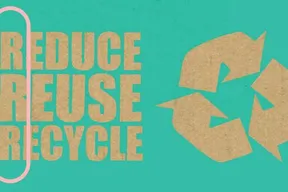
The refill is becoming a must-have alternative, especially in luxury — refill is even showing up in pharmacies. Zero waste is going mainstream. The rule of the 3 Rs prevails and is now prioritized in this order: Reduce – Reuse – Recycle.
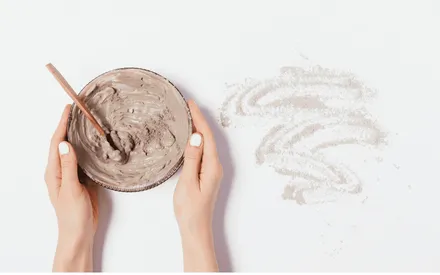
Same with galenics: sustainable innovation is the watchword. All-purpose solid cosmetics, effervescent formulas, compact sticks, powders to reconstitute or loose powders for use, pebbles and tablets... so many possibilities for three responsible goals: reduce water use, minimize packaging, and reuse it.
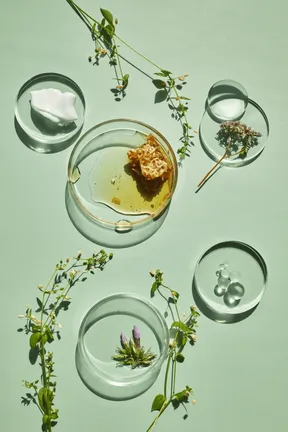
On ingredients, innovation is just as strong: efficacy, yes, but sustainability too! Thanks to organic ingredients, of course, the return of medicinal plants, heirloom seeds, and wild herbs, but also the development of green chemistry: biotechnologies make it possible to create powerful natural ingredients through ecological processes that control the energy required.
“Reasoned” agriculture is becoming an asset: regenerative agriculture, which restores soils, and vertical farming.
By improving product results
While organic cosmetics have noticeably improved the sensoriality and efficacy of their textures, solid cosmetics still lag behind. The segment is nonetheless posting fine growth: +3 points** of market share in two years (2019–2021) across all categories. 13.4 million French people bought solid cosmetics in 2020, representing more than a quarter of adults. But their results don't yet rival those of traditional cosmetics and remain a major barrier to going mainstream. Already, 2022 looks far less promising.
By improving usage
New galenic + new packaging = new usage.
It's an equation that seems coherent, but it's also a major barrier. Wasn't the dermatological bar abandoned because it was seen as unhygienic, set down carelessly on the edge of a sink where it left a mark each time? A few tricks are now offered (suction cups, nets), but will they be enough to win over the reluctant?
Likewise, loose powder to be mixed at the point of use entails a major change for which the consumer must be educated
By offering more ecological products at the moment of use
The Swiss consultancy Quantis showed in its 2020 report “It's Time to Make up the Future” that use was the most environmentally impactful moment in the product's life cycle: 40% of the overall impact.
Non-degradability, water and environmental toxicity, various waste, energy impact... to be a consumer is to have a negative impact. To win consumers over, let's show that Engaged Beauty has no impact or even a positive one!
By being more affordable across all distribution channels
The current climate has pushed the environmental question into third place among concerns, after the economy and war. Purchasing power is falling and is pushing “consuming better” to later. The latest studies show a sharp drop in “eco-active” consumers: –4 points***. Yet to democratize Engaged Beauty, it must be made more accessible to as many people as possible and more visible — which means broader price coverage paired with a strong presence in retail outlets.
Yes, cosmetics can and must help consumers become more responsible. That is the whole point of Engaged Beauty: to win an ever-larger share of the traditional cosmetics market and settle into it for good. It can only do so when it is consumed not as a “complement” but as a true “replacement,” and only when price, use, and results align with the expectations of the broadest share of consumers.
*Sources: 2nd Edition of the Contributing® Barometer;
**Agence BIO, BioAnalytics, INC, biolineaires.com (“Expert views: solids consolidate their position in the bio hygiene aisle,” Bernard Ollié, Good, March 2022); ***Kantar Who Cares Who Does 2021 (World).