
By Céline Couteau and Laurence Coiffard
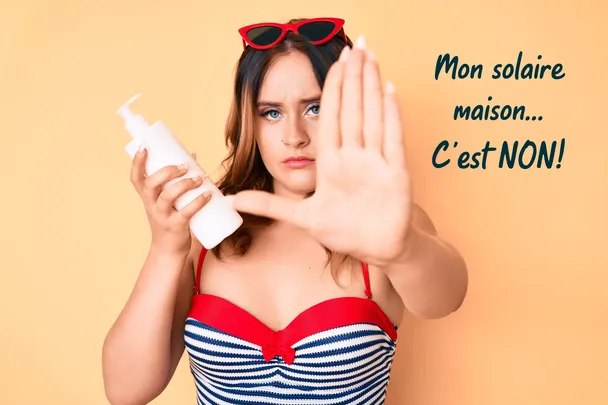
DIY: cosmetics with no “chemical” ingredients
How many times have we seen this phrase across the internet? From Pinterest to Facebook, by way of TikTok and bloggers' sites, the term “chemical ingredients” is waved under the reader's nose like a scarecrow. Type “homemade sunscreen recipes” into your keyboard and a string of clichés will come your way, all aimed at stigmatizing commercial sun-protection products. We're told of “sunscreens that are harmful to skin and to the environment,” 1 of “endocrine disruptors and carcinogenic ingredients,” 2 of “toxic ingredients”,3 “for our health and for the oceans.”4 Homemade recipes, meanwhile, are presented as “100% natural and risk-free.”
So on one side, we're told, there are dangerous industrial cosmetics, and on the other, homemade cosmetics blessed with every virtue. Should we go along with this idea? Of course not!
DIY: an activity with no regulatory framework
DIY Do It Yourself can be translated as “make it yourself.” To our taste, the expression could be rounded out as follows: “…and don't come complaining if you then run into trouble.” This practice, which most often consists of trading recipes from one private individual to another, is entirely unregulated.
Where a manufacturer faces a host of obligations the moment it wants to market a cosmetic product in the United States, it must know the applicable regulations inside out and document the safety of the product the home-recipe enthusiast is set loose in the cosmetic jungle. As a rule, they take no verbal precautions to protect themselves against accidents.
Rare are the sites that carry a “disclaimer.” When they do, the wording is something to behold: “Do NOT use homemade sunscreen unless you are 100% comfortable with the idea. It's your choice and you are responsible for your own safety. Although we have successfully used our recipes for several years on ourselves, our friends, and our family members, no laboratory testing has been done to validate their efficacy. Homemade sun creams and butters offer no guarantee of protection, since the method of preparation and storage can reduce the effectiveness of the mineral filter.” 6 There it is, plainly stated: “Make it yourself, and don't come complaining if you get a sunburn and skin cancer afterward!
DIY: an activity overseen… by non-experts
Setting aside expertise altogether, DIY is most often promoted by people with no training in the cosmetics field. Some even tell us so, with great humor: “In the top 10 of things we never imagined doing one day, making our own sunscreen would probably have topped the list, closely followed by 'climbing Kilimanjaro.” 7 Art director at an ad agency,8 naturopath,9 a mom questioning a world of “frantic”10 consumption, a psychic mom…11 the profiles of people posting recipes online are varied. Their common thread: a complete absence of training in cosmetics.
DIY: efficacy tested by guesswork
Because consumers are used to seeing an SPF (Sun Protection Factor) on commercial sunscreens, most blogs cite values for the products they formulate. Fanciful SPFs are assigned to a number of fatty substances and essential oils. Examples include peppermint essential oil (SPF 7) or raspberry seed oil.12,13 Olive oil is also presented as a sun-protection ingredient of choice.14
For our part, we tested about fifteen homemade recipes in our pharmacy-faculty laboratory, demonstrating their poor effectiveness, with in vitro SPFs ranging from 1 to 5. 15 We'll note here that, under European recommendations, a product with an SPF below 6 cannot be called a sun-protection product. In the United States, sun-protection products are likewise tightly regulated.
DIY sunscreen: a risky activity
In 2017, France's medicines agency (ANSM) warned cosmetics manufacturers about their marketing claims, stating that a plant oil such as karanja oil could in no way be considered a sun-protection product.16 Beyond communicating with manufacturers, it would be essential to launch a campaign to make consumers aware of the ineffectiveness of homemade sunscreen recipes and therefore their dangerousness. For our part, we have begun to speak out on the subject through posts on social media. When it comes to cosmetics, nothing beats the expertise of a good professional.
In short, in conclusion
To be well protected, nothing beats a sun-protection product containing a combination of UV filters chosen from those approved by the relevant regulator. In the United States, sunscreens are regulated by the FDA as over-the-counter (OTC) drugs not as cosmetics and only the UV filters permitted under the FDA's OTC sunscreen rules may be used.
These filters, which have proven their effectiveness and safety, must be incorporated in a sufficient dose suited to the targeted SPF. It is wise to combine organic and inorganic filters (titanium dioxide in particular), in order to bring together the advantages and characteristics of each of these families of molecules. It is also worth noting that mineral filters should be used in nanoparticle form rather than pigmentary form for genuine sun-protection effectiveness.
Finally, it's worth underlining that a natural molecule is not, by definition, safer than a synthetic one both are “chemical” molecules, made of atoms. As for the endocrine-disruptor effect, it should not stop us from sleeping, nor from protecting ourselves well from UV rays. Do the bloggers who recommend slathering ourselves in olive oil before sun exposure know about the luteolin present in their favorite ingredient? Ah, by the way: luteolin is a phytoestrogen — an endocrine disruptor. Point made!