
In recent years the cosmetics market has shown tremendous dynamism and deep reinvention. Naturalness, eco-responsible commitments, terroir, local, upcycling, wellness... Many entrepreneurs are launching ventures, eager to add their stone to the ethical rebuilding of the sector.
With all this enthusiasm, the challenge of standing out is truer than ever. Upfront marketing thinking is therefore essential. The product alone cannot make the difference.
So how do you build a successful cosmetics brand? Here are some of the essential (and non-exhaustive) steps.

Build the brand's reason for being
What is a brand's Reason for Being? It's its WHY.
Simon Sinek, the brilliant British speaker who specializes in motivation and management, explains it well through his Golden Circle. He ranks the three questions you must ask to build your brand: What? How? and Why?
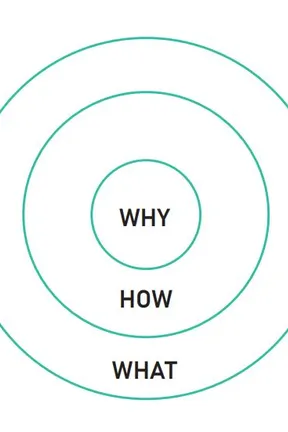
Most brands talk about the What: which product and which benefit? Yet Simon Sinek tells us: “people don't buy what you do, they buy why you do it.”
So you have to get back to a reason that is more emotional than pragmatic: the Why. To win people over and move beyond a simple competitive comparison.
When a brand leverages its WHY, it speaks to consumers' values and convictions, boosting their sense of belonging and their engagement. More than a product or a price, the consumer chooses a brand for its values; they buy into a vision. The USP (Unique Selling Proposition) then becomes clearer.
The Why underpins every marketing, sales, and communication decision. It guides every brief: design and graphics, brand expression, communication, formulation, packaging...
Co-create with your community
The community is made up of precious ambassadors, won over by the values you carry and willing to get involved to co-build the brand from its very origin and boost its reputation.
Goal: build a “love brand.”
This community is built on social media, mainly Instagram, thanks to an effective content strategy derived from the Why. Note: above all, you must first have worked out the brand's tone, both visual and in wording (the choice of words).
Test yourself against the market
A solid knowledge of the market is essential to objectively gauge the project's merit:
- Know the Supply well: target competition, market segments, new players, major innovation trends... Analyze the offer through the lens of the product, but also services, support, values, and communication strategy.
- Target the Demand: know your audience, their profile and expectations, and their community. Build what are called “personae” (precise profiles of typical consumers, including their habits, reading, interests, hobbies, and purchase and information journeys...). The analysis must cover both functional benefits and values.
- Don't forget understanding the Environment: regulatory, legal, industrial, logistical... The environment calls for the support of expert professionals. A SWOT analysis (Strengths, Weaknesses, Opportunities, and Threats) rounds out the picture.
Strategically align “product value,” price, and distribution
This is where you set the Marketing Mix, the 4 Ps: Product, Price, Place (distribution), and Promotion. The goal here is above all to make sure the product's “value” is consistent with its displayed selling price and its distribution channels but also relative to the target audience. A focus group (qualitative group study) or co-creation work with the community can help firm up both the right price and the product value.
“Well” source your suppliers
Every project is different and needs the right suppliers. But what makes a supplier “right”? It's the one that best meets the criteria deemed important to carry out the project: target product cost, certifications, minimum sourcing or production runs, technical feasibility, back-planning, full service or not, geographic location, etc. — but also the “feeling,” which is very important!
Be precise about formulation requirements
Beyond the values they carry, cosmetic products meet very specific expectations. They must deliver the visible and felt results the target audience expects.
The formulation brief is then a crucial step, to start on the right footing: skin type, ages, claimed benefits, selected ingredients, usage... not forgetting the target cost and the packaging choice. The information is precise, and nothing should be missing to ensure you end up with the right product.
Know the regulations and get expert help
Cosmetics regulation is precise. (In the European framework, it stems from Regulation (EC) No. 1223/2009 and France's Law No. 2014-201.) For products intended for the US market, cosmetics are regulated by the FDA under the FD&C Act as amended by MoCRA, and all product claims must be truthful, non-misleading, and substantiated. Required pictograms and warnings, claims to be proven... it's a complex exercise, and getting expert help is essential.
Master the project's profitability
At the product level and overall, ideally over the first three years of launch. Product cost is only a small part of the spending to plan for. You need enough margin to absorb all the strategic costs: logistics, communication, and distribution, for example. A necessary first step in building your business plan.
Building a brand well takes time, expertise, and precision. It sometimes requires certain compromises, but solid upfront analysis lets you make the right strategic choices. So, after “building your brand well” comes “launching it well”: defining the right strategies, both digital and retail, in France and internationally.
But that's another topic!